Walking the Northumberland Coast: Craster to Low Newton
From castle ruins to sweeping beaches, discover why the Craster to Low Newton coastal walk belongs at the very top of your Northumberland bucket list.
A rocky shoreline glistens under the retreating tide as cattle graze peacefully on a grassy turf. Ahead, four miles of Northumberland coastline unfolds in a mix of golden beaches, wind-sculpted dunes, and the manicured greens of the local golf course. Anchored firmly above it all, the dramatic ruins of Dunstanburgh Castle crown the landscape.
This is the Craster to Low Newton coastal trail.
Known for its miles of sandy bays and charming fishing villages, this beautiful route bridges the gap between Craster and the quiet shores of Low Newton. I spent a sunny Saturday afternoon walking this stunning stretch of coast, fuelled by the romantic scenery and the promise of a cold pint waiting for me at the Ship Inn at Low Newton.
Here’s everything you need to know to make the most out of this seaside escape.
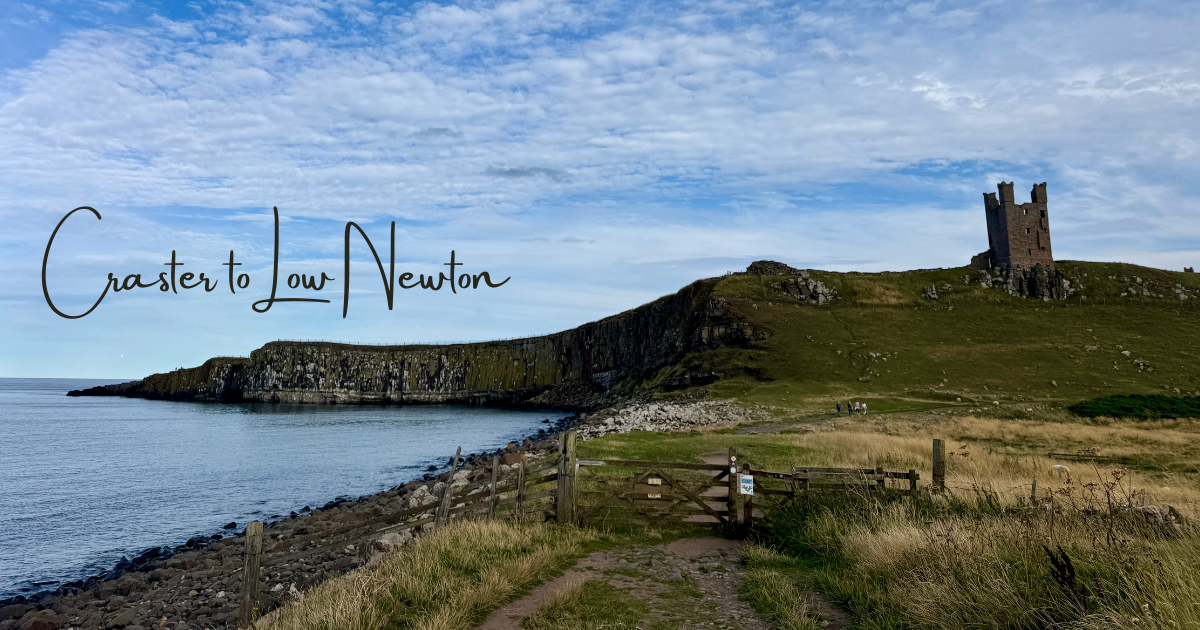
Route details
Here is a quick snapshot of the route, covering everything from distance and difficulty to the key landmarks along the way.
Distance: 4 miles (6.5 km) one way | 8 miles (13 km) circular
Duration: 1.5 hours one-way | 3 hours full loop
Terrain: Grassy coastal paths, sandy beaches, gentle rocky trails
Difficulty: Easy to Moderate
Key Landmarks: Craster Harbour, Dunstanburgh Castle, Embleton Bay, Low Newton square
The walk itself isn’t too challenging, as it’s mostly flat, though it can get uneven in places. There were a few inclines when navigating the dunes, but overall, it was a lovely, easy-going walk.
Setting off from Craster Harbour
Our day started in Craster, a small fishing village tucked into the Northumberland coast, famous for its incredible sea views and traditional smoked kippers (I haven’t tried them myself, but I’ve heard good things). If you fancy a taste, you can pick some up at L. Robson & Sons, a century-old smokehouse right near the water.
We parked at Craster Quarry Car Park, just a short stroll from the harbour. It was £9.50 for the full day (fairly expensive, I know, but it was worth it for the peace of mind while out on the trail all afternoon).
Craster itself feels straight out of a coastal novel. Weathered stone cottages line the harbour basin, overlooking colourful fishing boats and eager swimmers bobbing in the water. The harbour is such a beautiful place to start, and it only gets better from here. As soon as you step past the last cottage before the trail, the paved road gives way to open turf and the wild Northumbrian coastline opens up right in front of you.
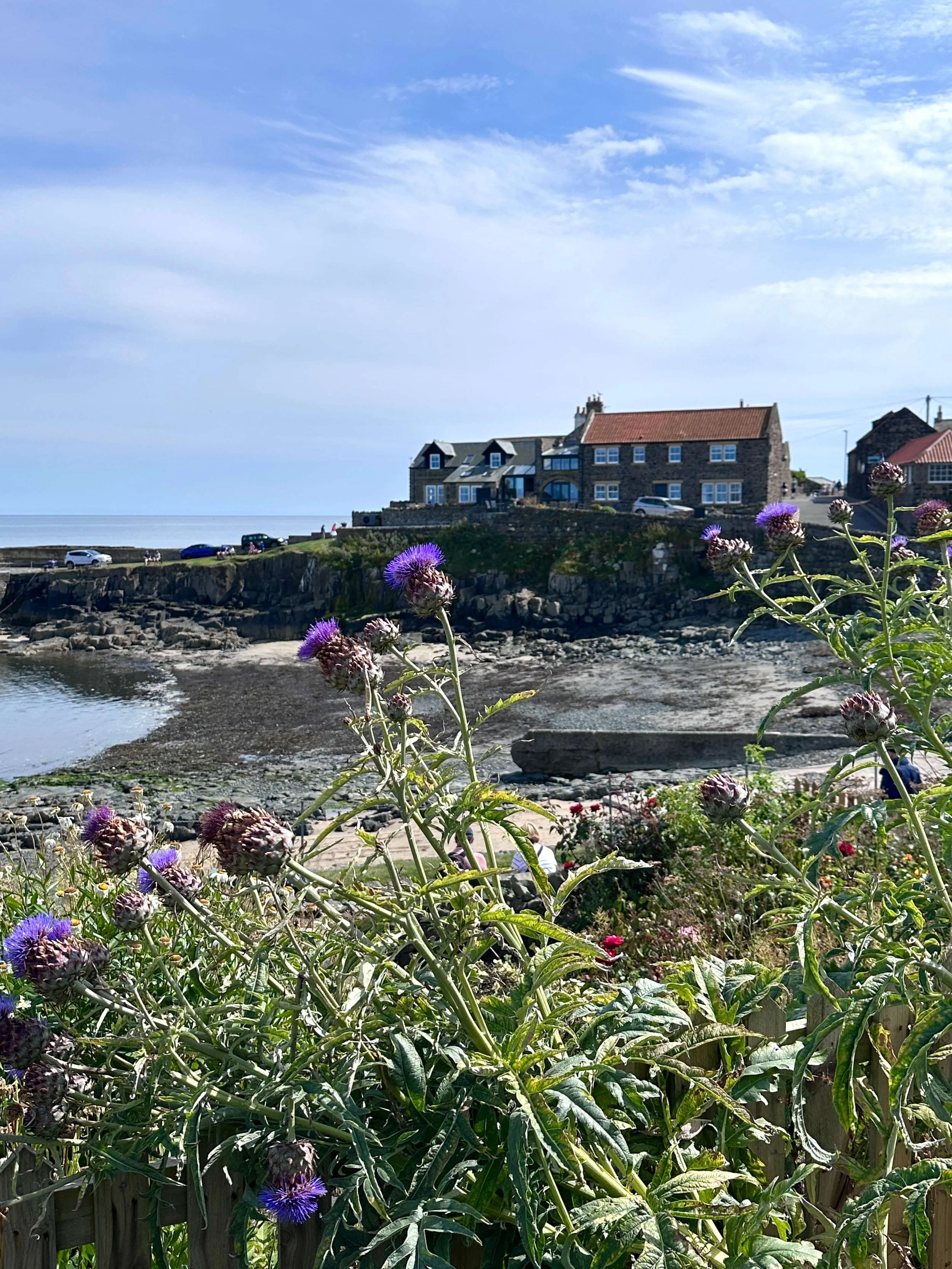
We started our journey at the beautiful Craster Harbour.
Dunstanburgh Castle
After leaving Craster behind, the village road melts away into a grassy trail that hugs the coastline. In the distance, it’s hard to miss the incredible landmark that is Dunstanburgh Castle. The ruined fortress dominates the skyline; its gothic silhouette looks like it’s been plucked straight from a movie.
The path winds through open fields where sheep and cattle rest and feed, while the tide laps against the rocks on your right. You can walk right up to the base of the castle and around the headland for free, though entering the inner grounds requires an admission fee (around £6-£8). We took the trail that wraps around to the left of the ruin, admiring the structure from below.
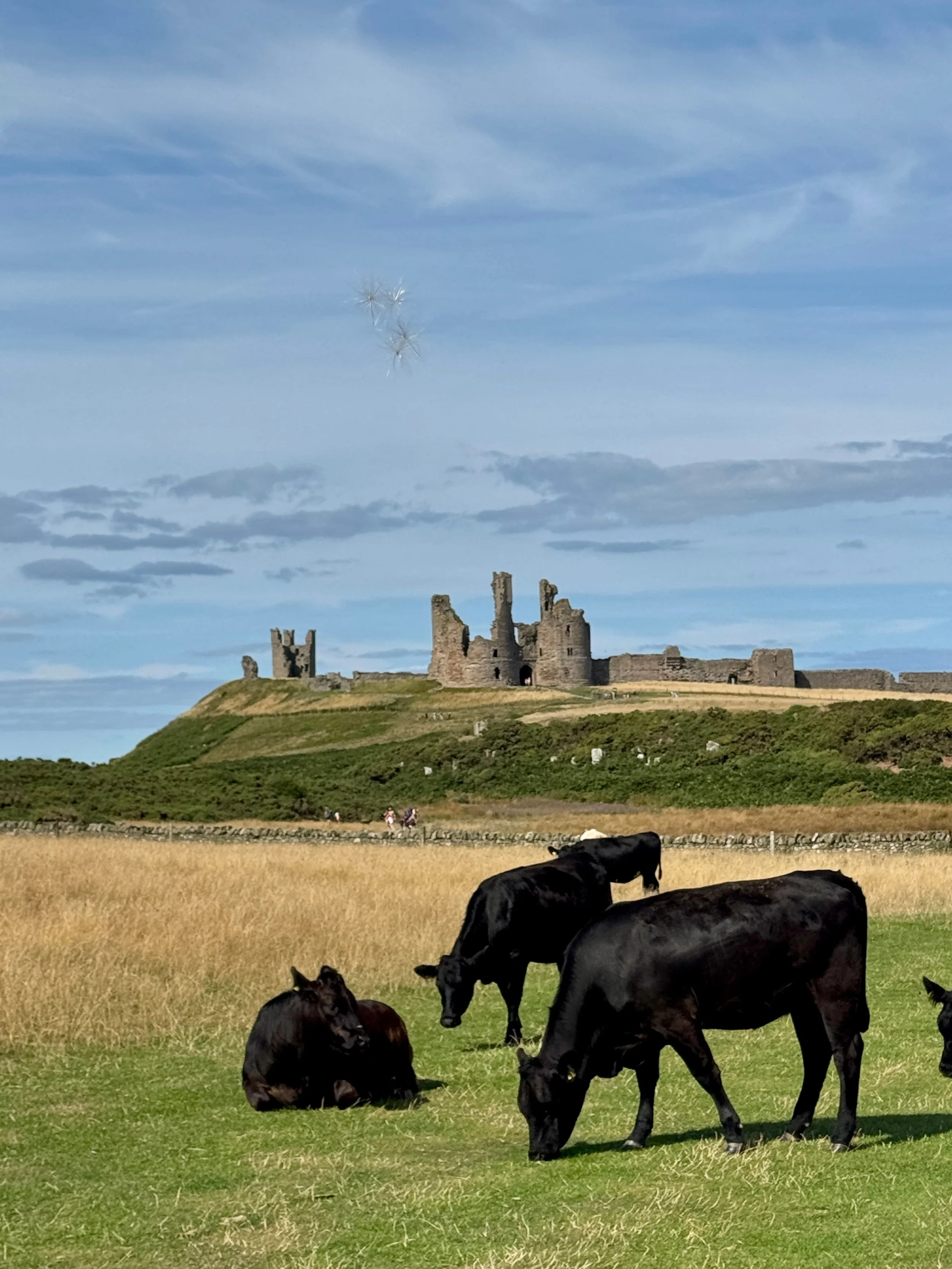
Cattle grazing in front of Dunstanburgh castle.
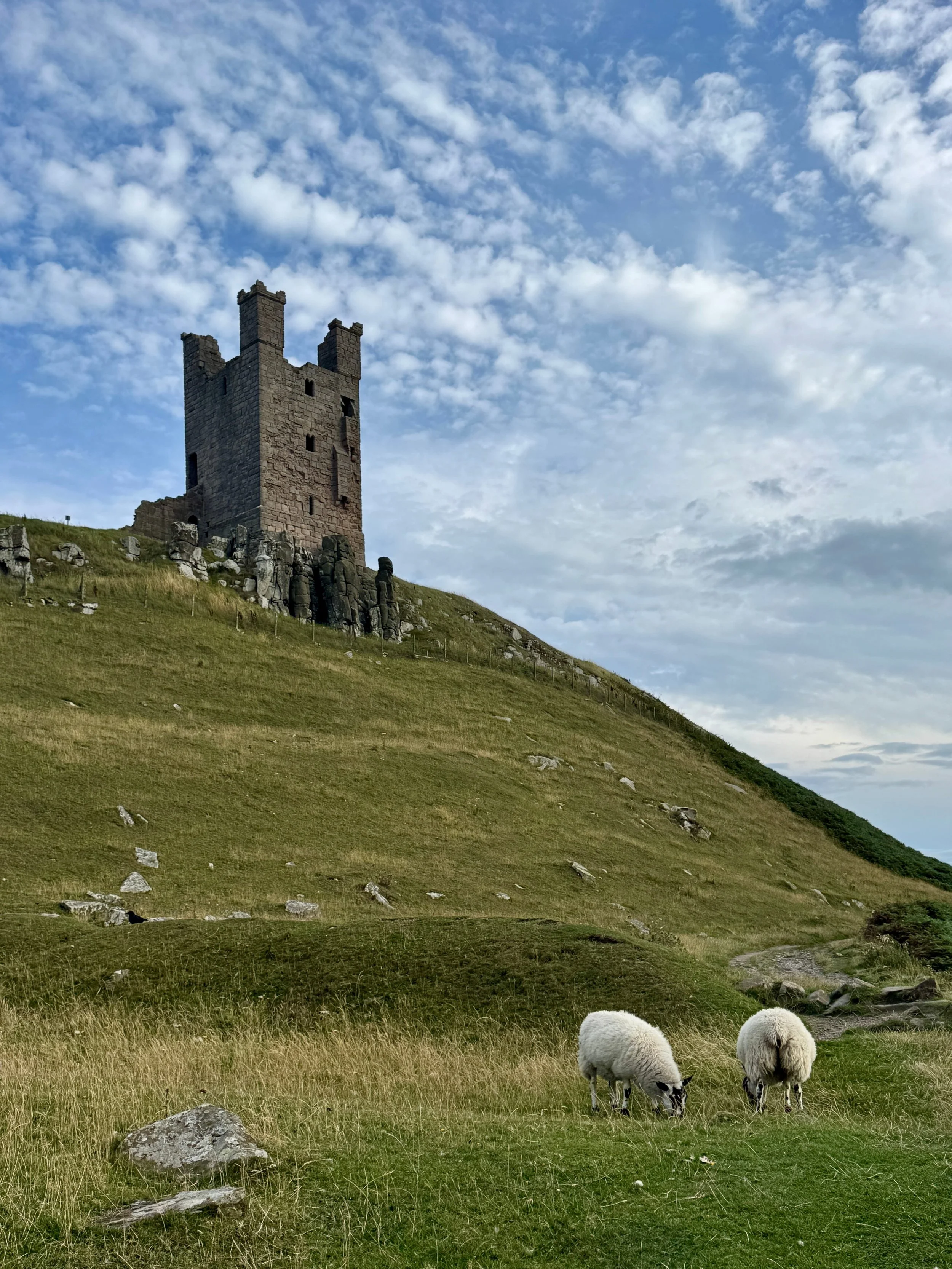
The view of Dunstanburgh Castle along the coastal path.
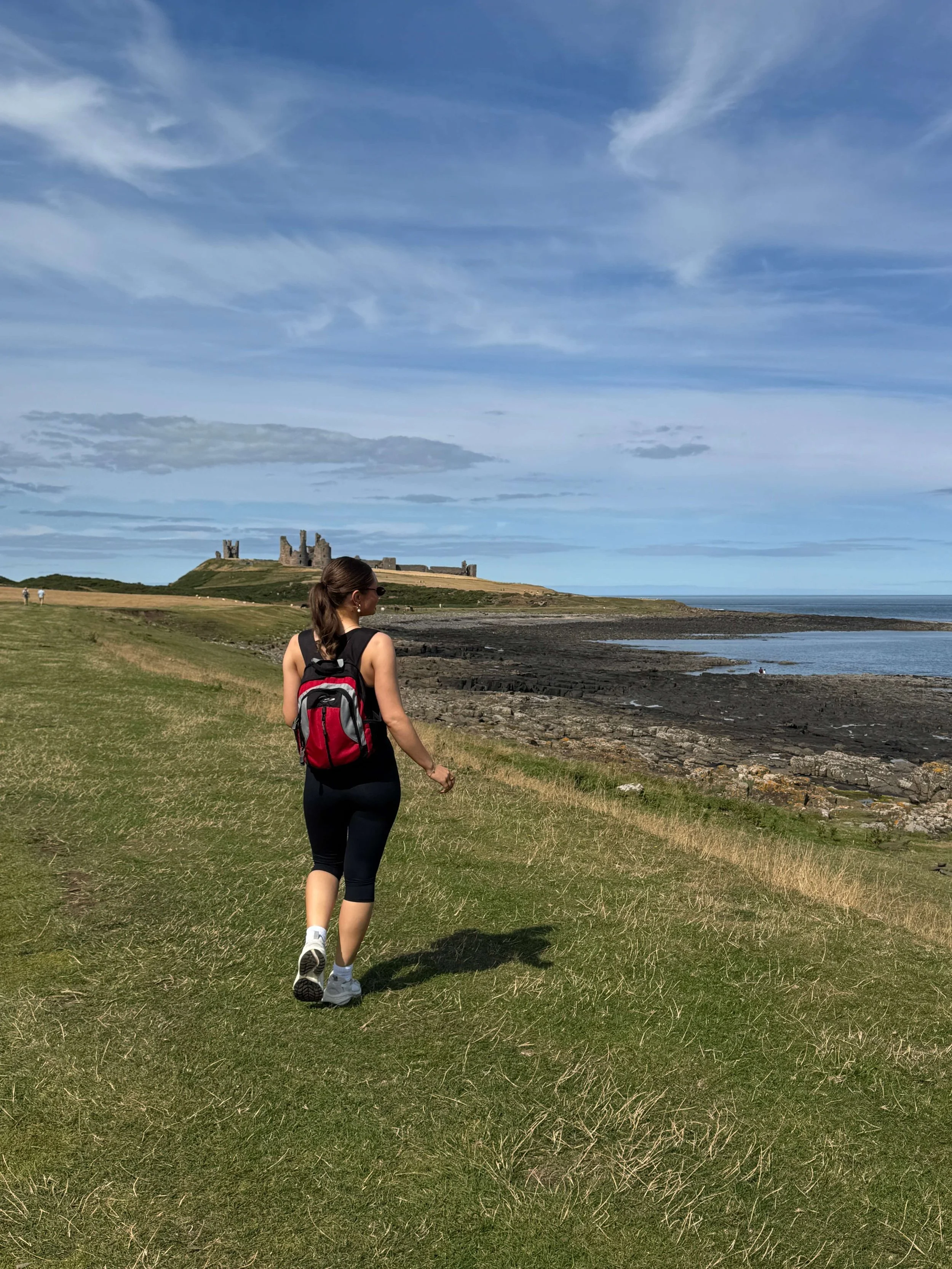
The coastal trail tracing the edge of the North Sea.
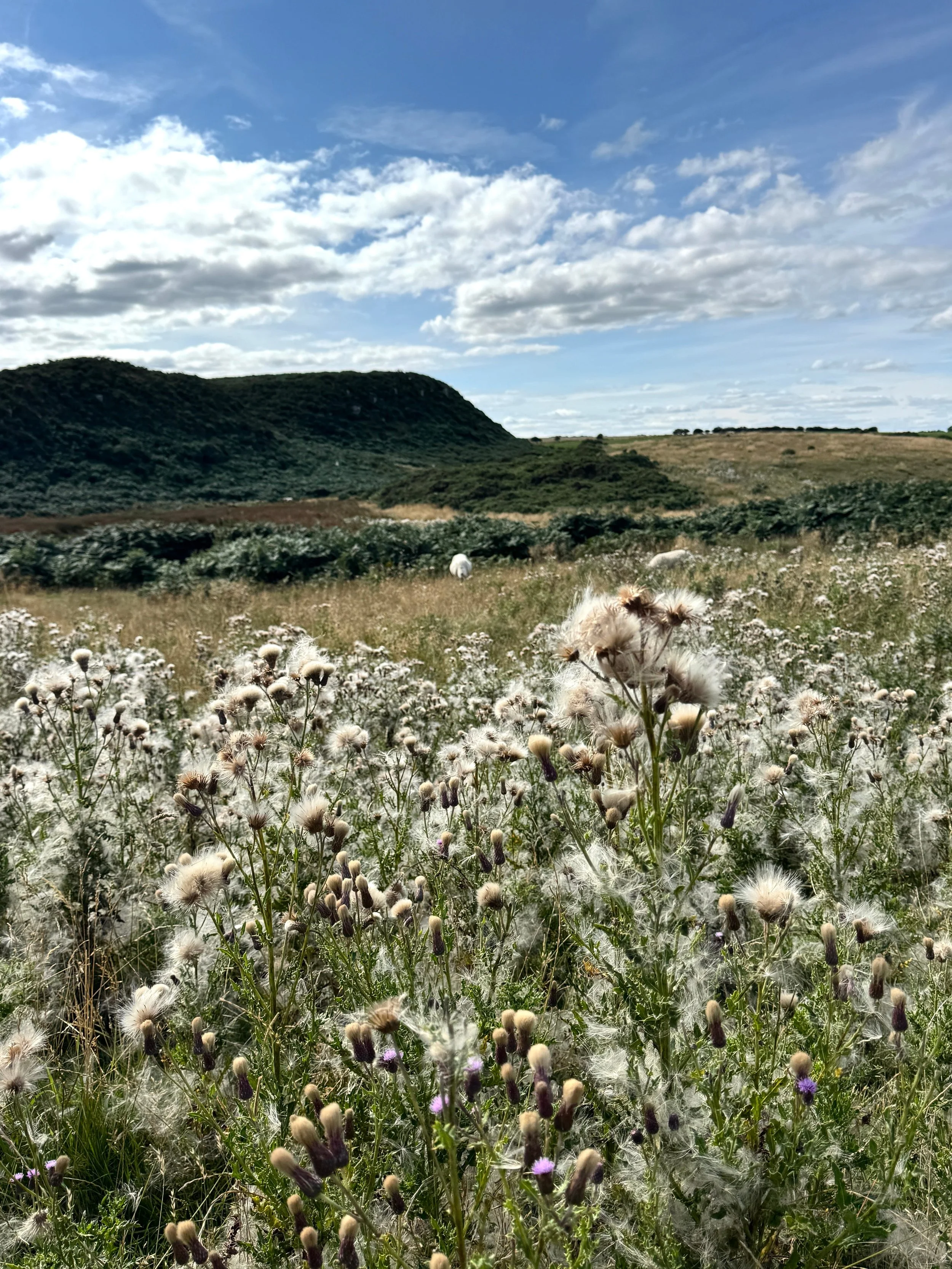
The fields were dotted with white thistles and purple wildflowers.
Walking the shoreline
Once you wind past the castle ruins, the landscape opens up into a sweeping stretch of coastline. On your right lies the golden sand of Embleton Bay, while to your left, the green fairways of Dunstanburgh Castle Golf Club line the dunes.
Heading north, you have two route options to Low Newton:
The beach route: Drop down into the dunes and stroll along the firm, wet sand at the water’s edge.
The Nature Reserve route: Follow the trail bordering the golf course, which winds through the dunes and past the Newton Pool nature reserve.
For the complete circular walk, it’s best to take the coastal beach route up to Low Newton and circle back inland through the nature reserve. This way, you get to see the best of both.
The coastline was beautiful. We crested the grassy dunes before stepping down onto the soft, golden sands of Embleton Bay. The bay was bathed in warm August sunshine, with swimmers and sunbathers scattered along the shore. Not bringing a swimsuit was my one regret of the day; a quick dip would have been so refreshing!
We followed the sweeping curve of the bay, passing weather-worn fishing boats rested on the sand and quiet timber holiday huts, until the whitewashed square of Low Newton and The Ship Inn came into view.
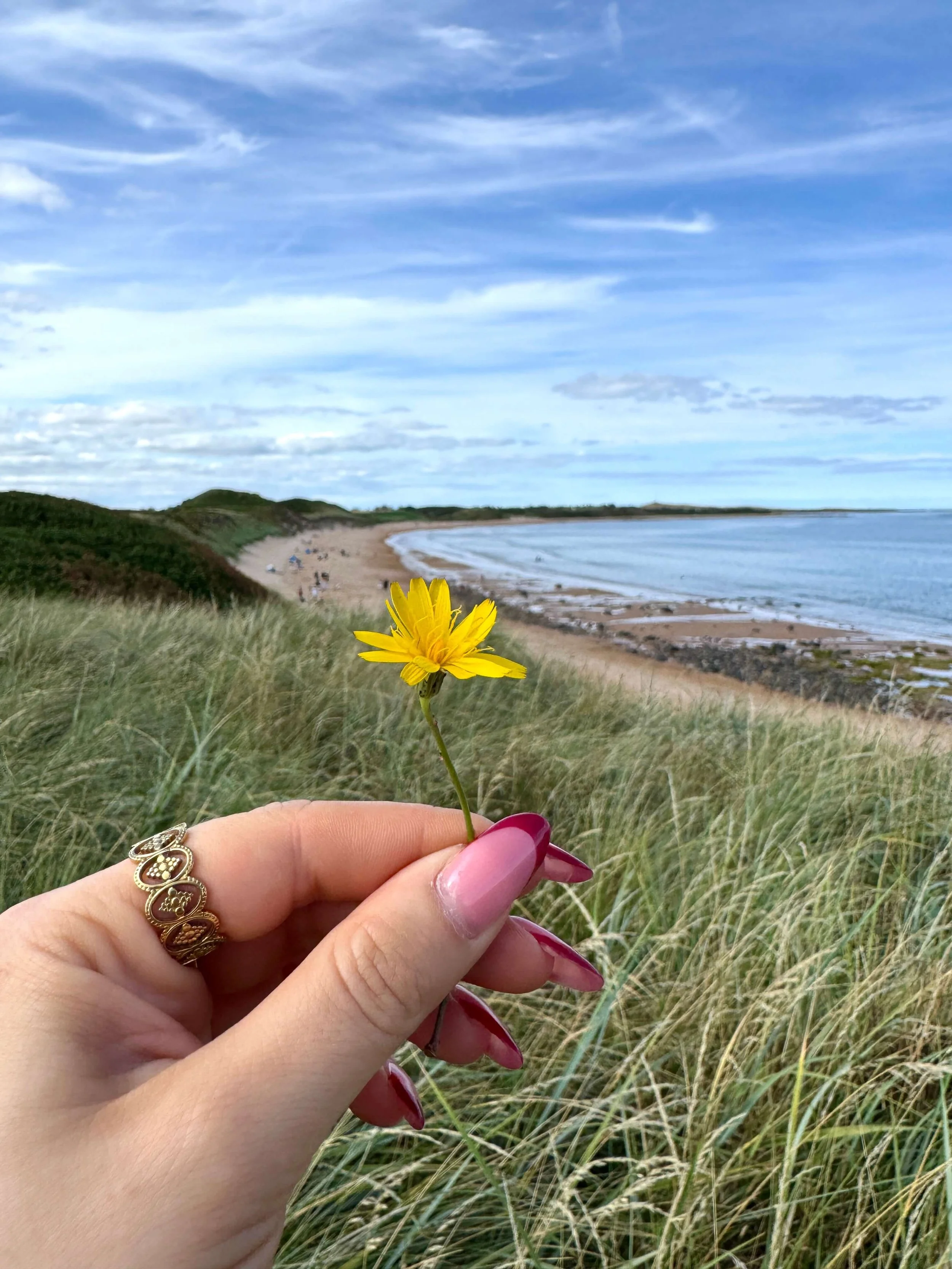
The sweeping coastline of Embleton Bay.

Making our way towards Embleton Bay.
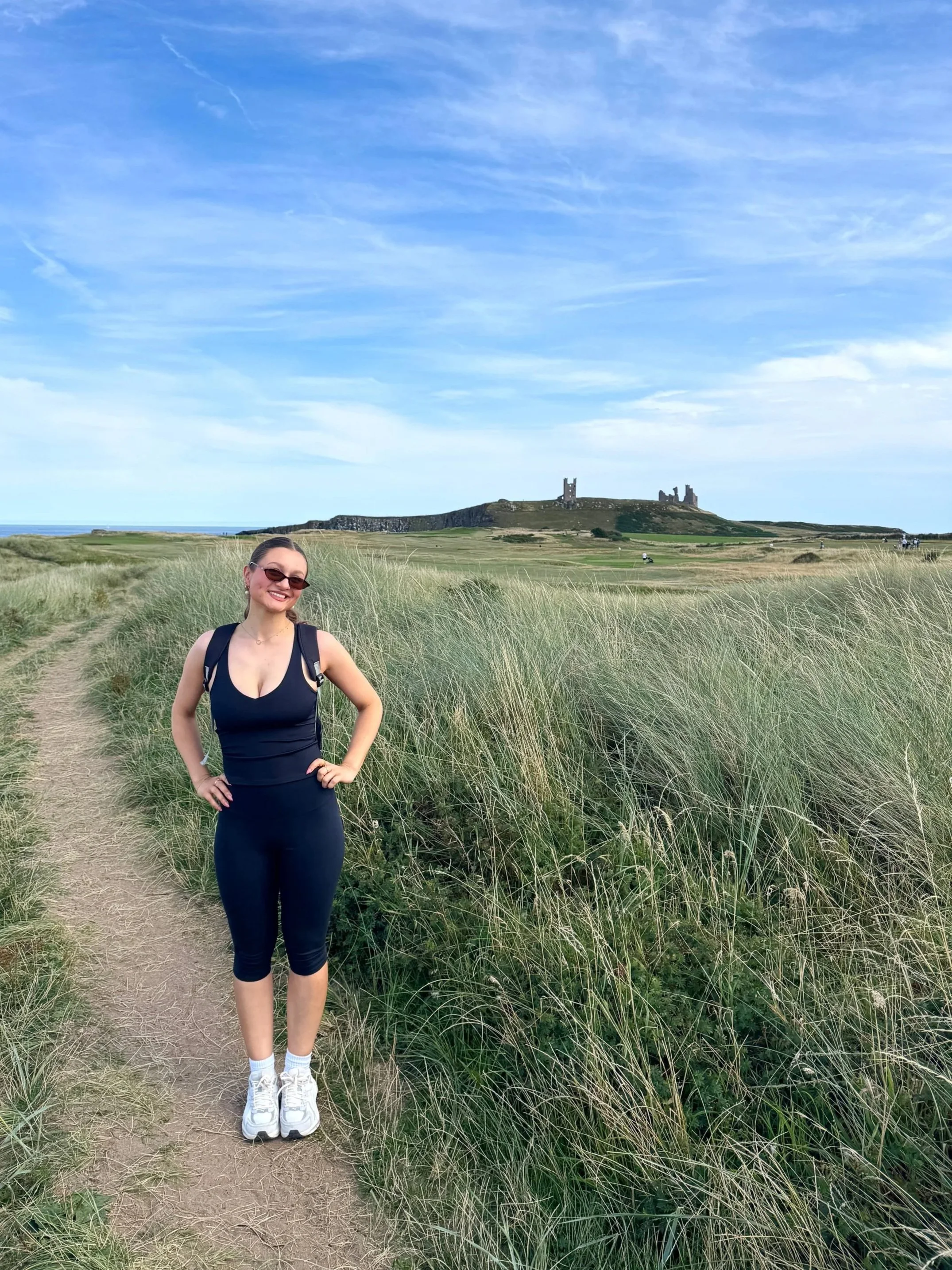
We walked through the dunes alongside the golf course, while the castle framed the landscape beautifully.
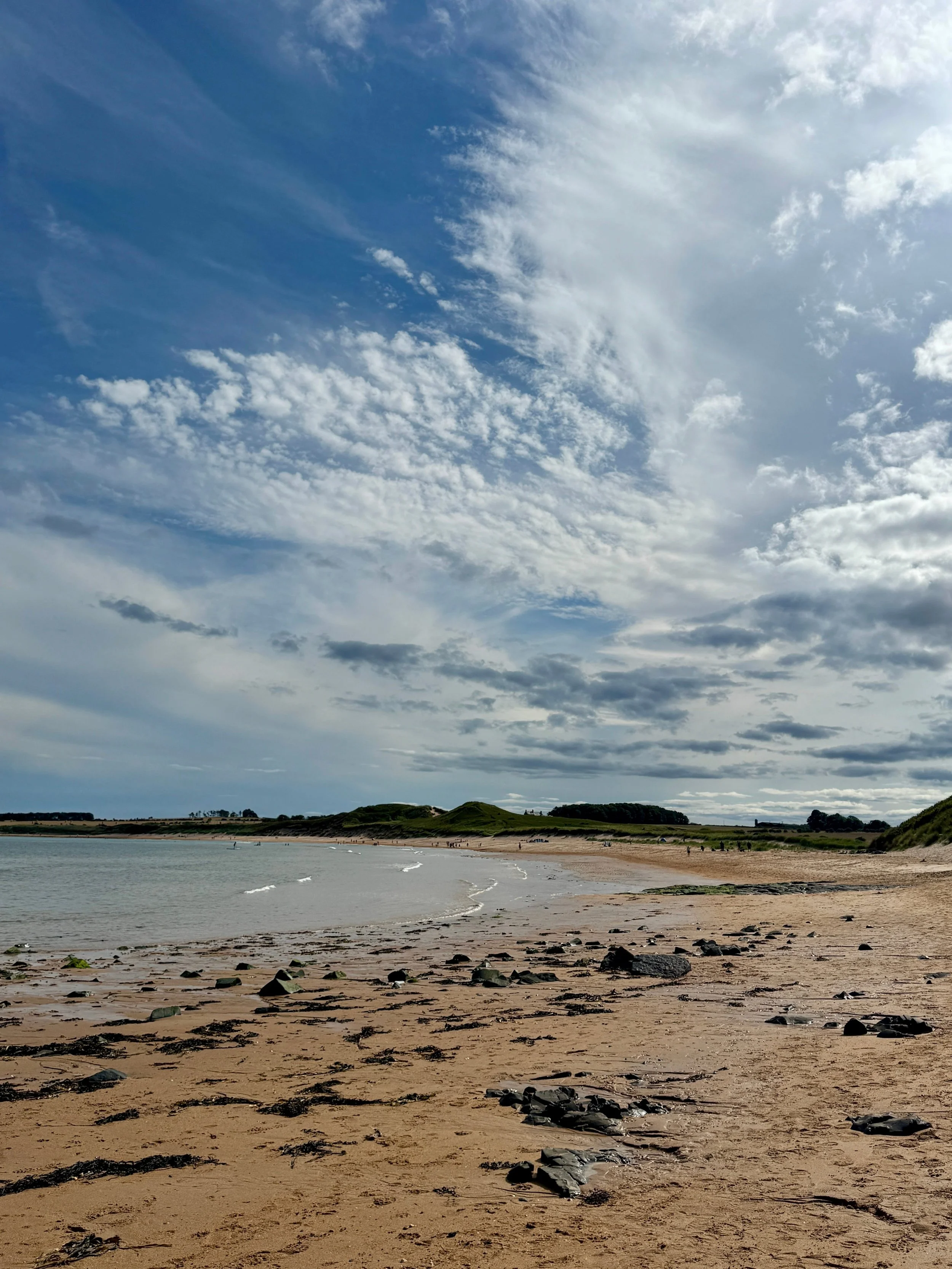
Embleton Bay was bathed in warm August sunshine as we strolled by the water.
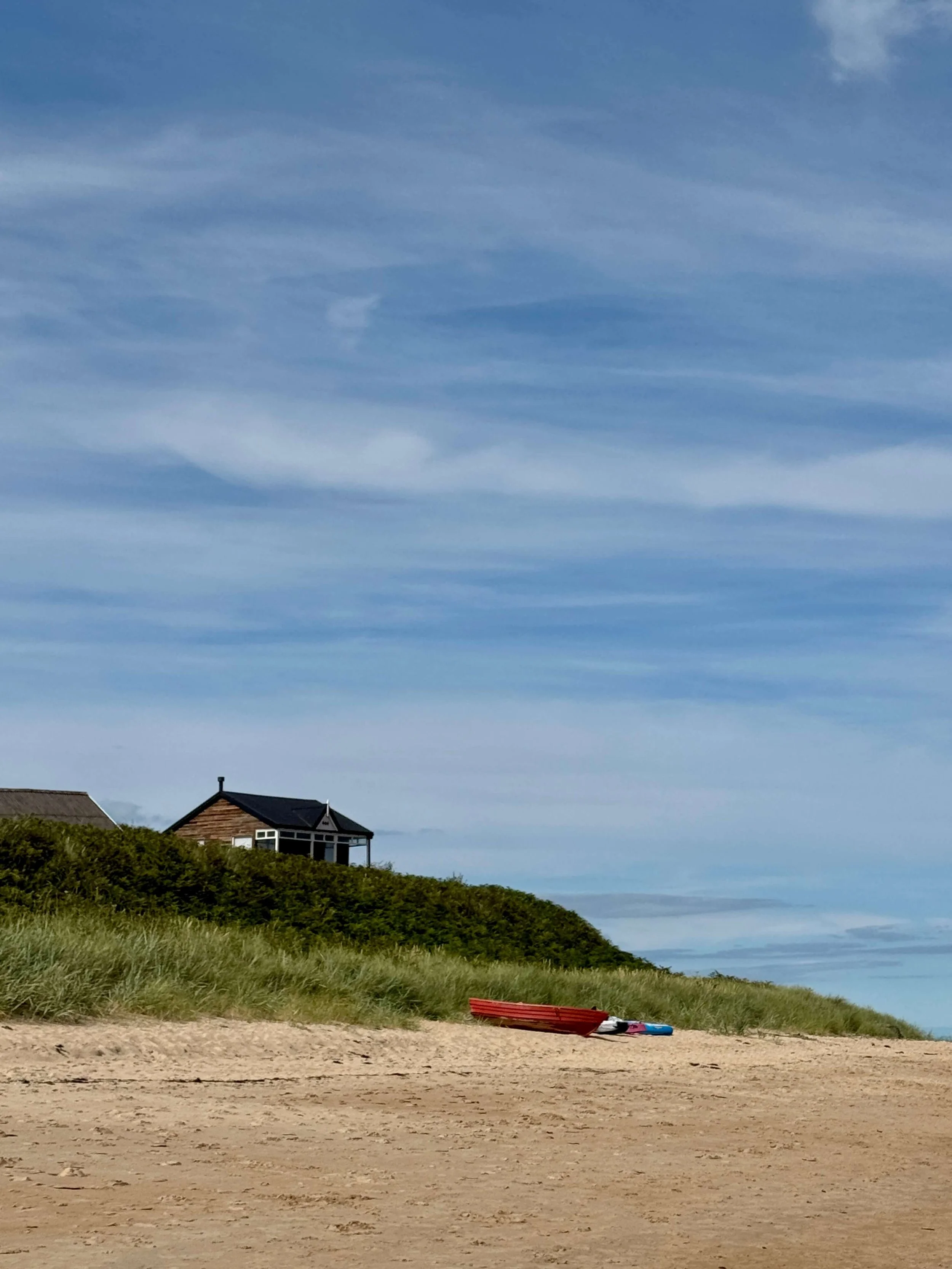
We followed the sweeping curve of the bay, passing weather-worn fishing boats rested on the sand and quiet timber holiday huts,
Low Newton & The Ship Inn
As you arrive in Low Newton, you'll see a grassy square framed by picturesque whitewashed cottages. Right at the heart of the square is The Ship Inn, which is the perfect pub for a well-deserved refreshment.
With a cold beer and a Diet Coke, we sat on the green to soak up the atmosphere, people-watching and admiring the 19th-century fisherman houses that line the square. I completely fell in love with it here; it had all the magic of a hidden coastal haven that felt like a world of its own. For a moment, I almost forgot I was still in the North East of England. I thought it would be the dream spot for a staycation, though the cottages around here are usually booked up months in advance (I can see why).
Once we were fully rested, we followed the inland trail behind the pub and back through the National Trust nature reserve. While walking through the woodland and dunes, you pass a cluster of historic timber chalets nestled among the sea grass. Built back in the 1930s, these rustic wooden bungalows are like tiny off-grid sanctuaries by the beach. It felt like stumbling upon a secret village.
The trail then reveals Newton Pool, set against the beautiful backdrop of the ancient castle ruins. From there, we traced the edge of the golf course alongside a few afternoon golfers, before rounding the headland past the fortress and heading back toward Craster.
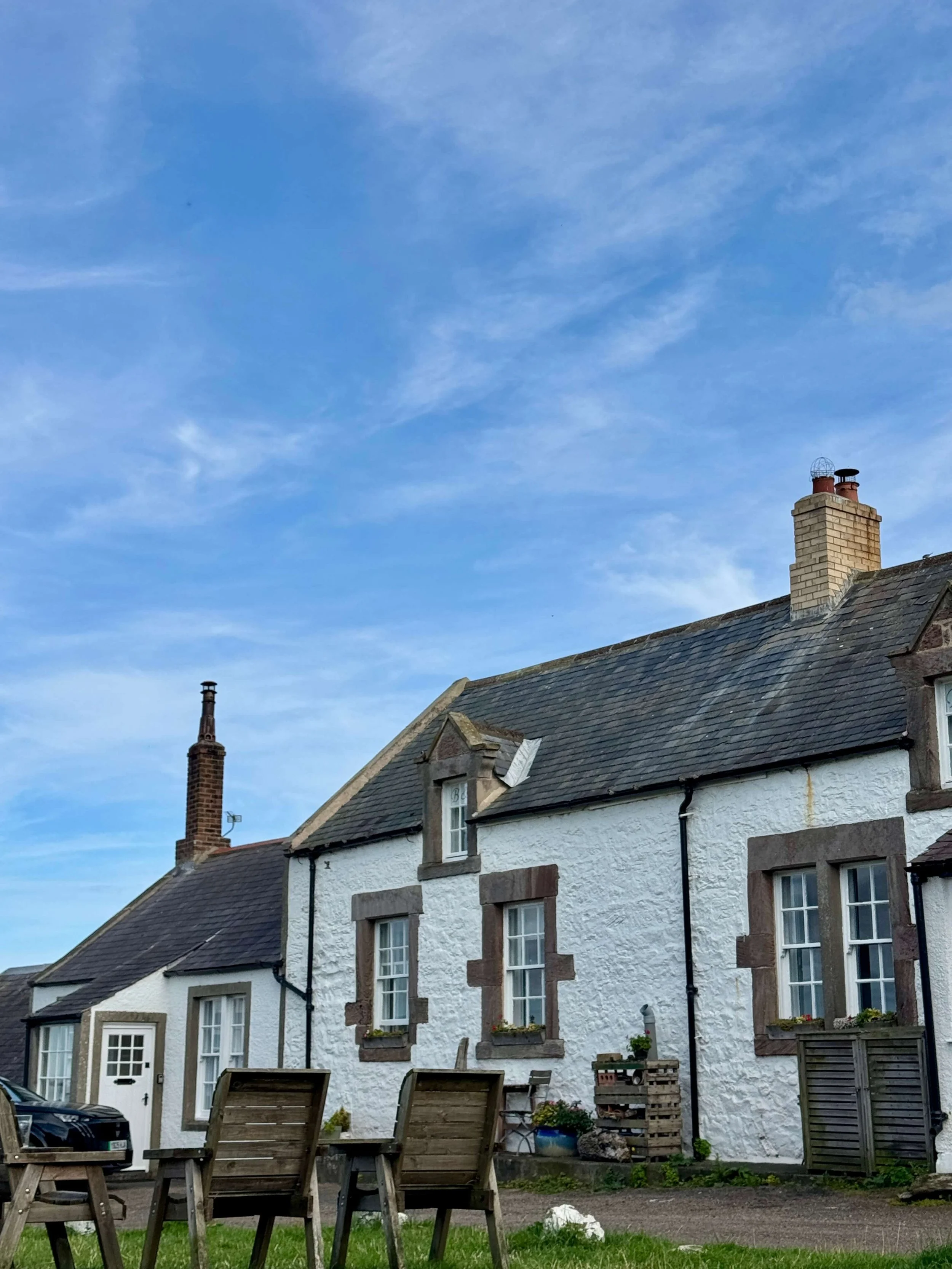
We sat on the green to soak up the atmosphere, people-watching and admiring the 19th-century fisherman houses that lined the square.

We walked through the National Trust nature reserve, winding through woodland and sand dunes.
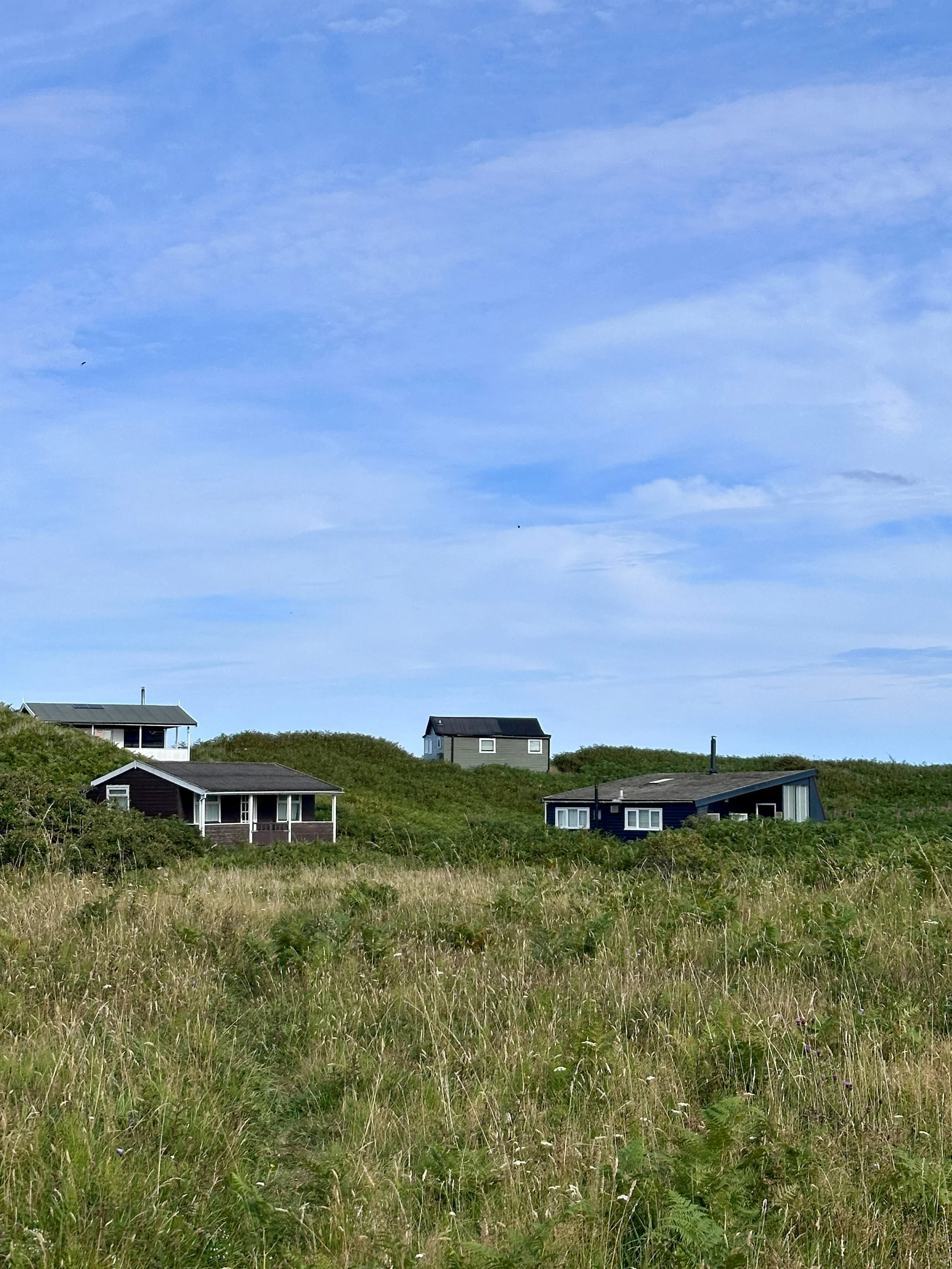
Timber chalets nestled among the sea grass.
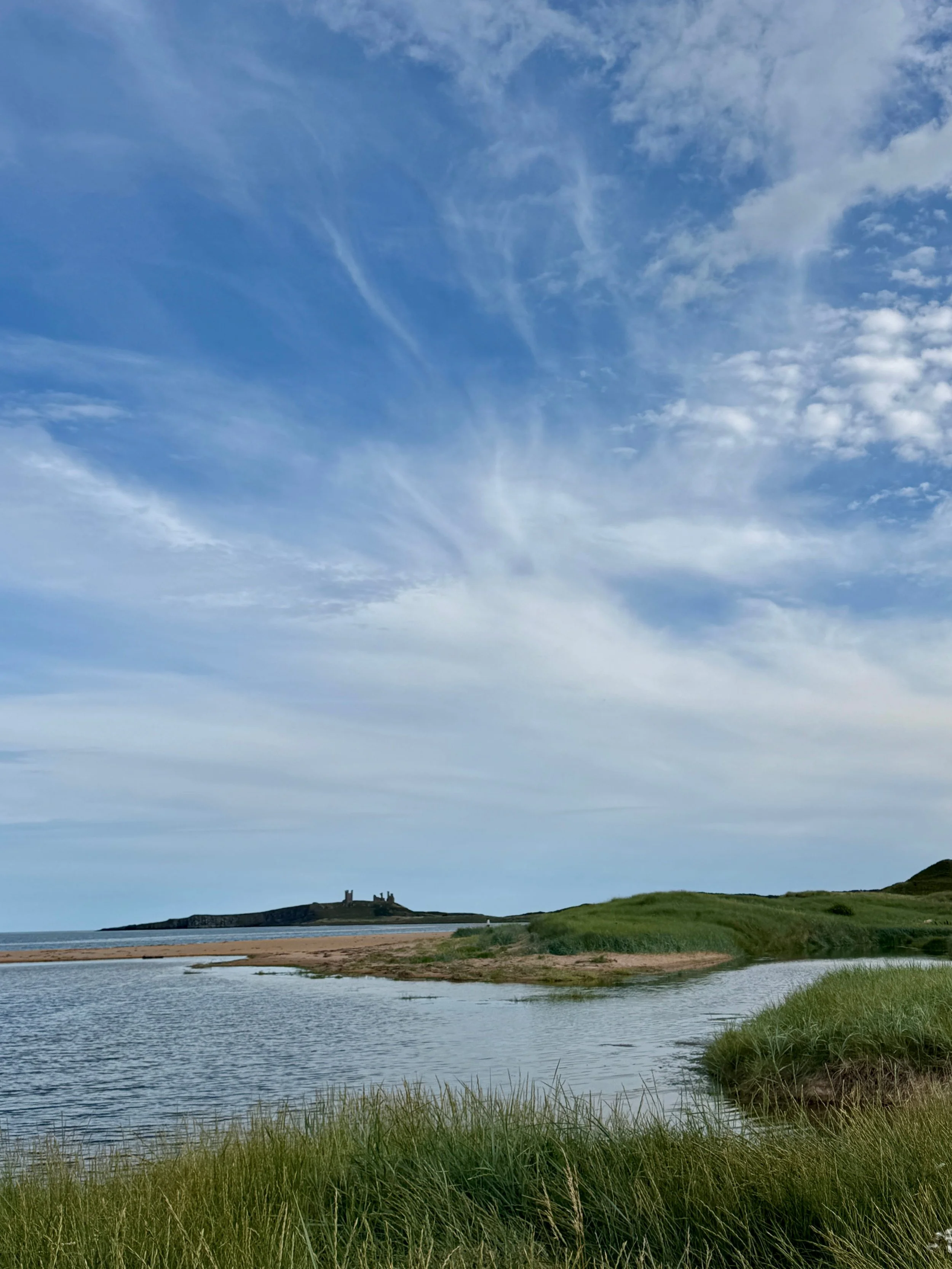
The trail reveals Newton Pool, set against the beautiful backdrop of the ancient castle ruins.
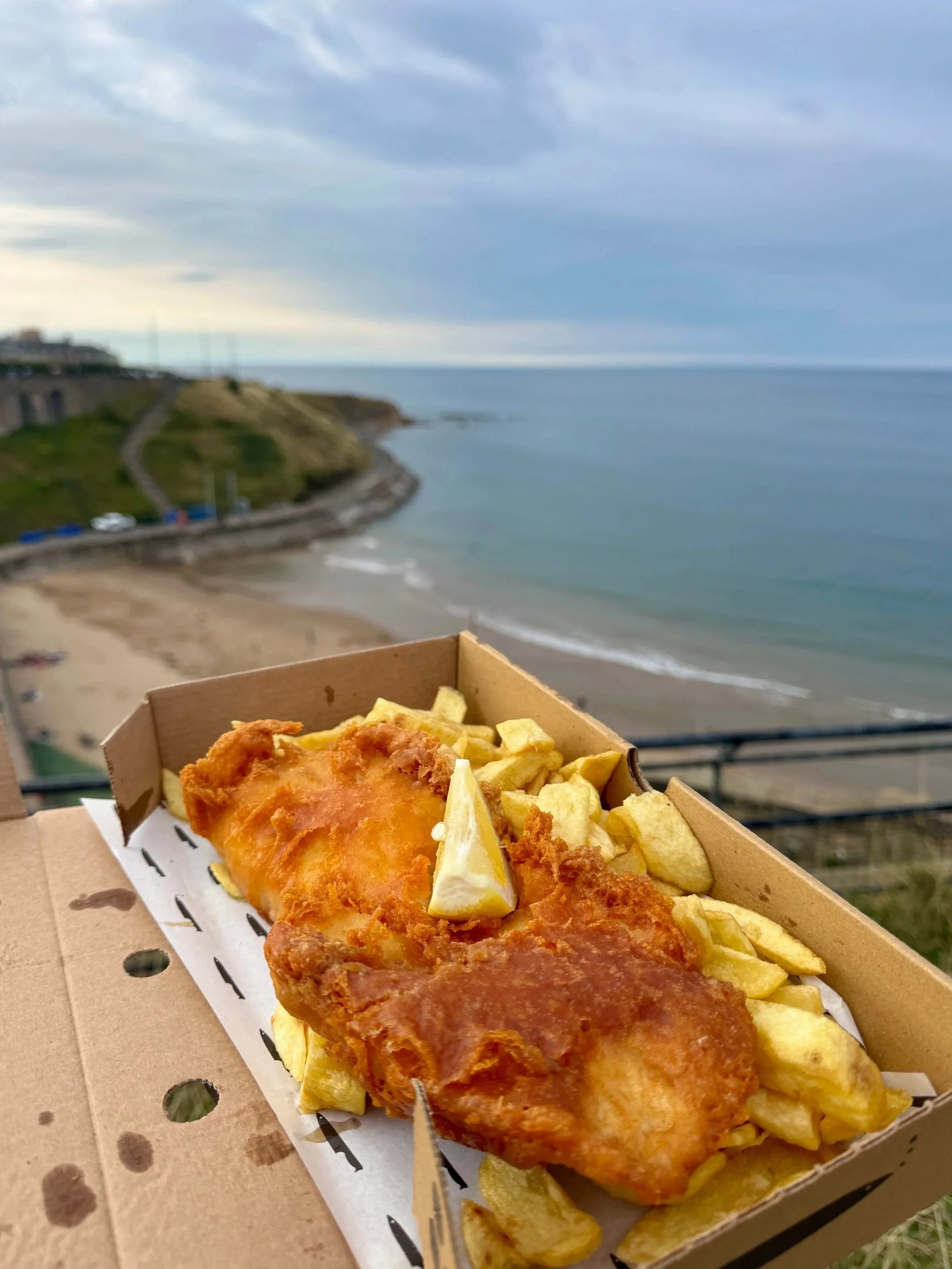
We rewarded ourselves with golden fish and chips from Longsands in Tynemouth, while overlooking King Edward’s Bay.
We brought our day to a perfect close in Tynemouth, enjoying golden fish and chips from Longsands while perched on the wall near the Priory overlooking King Edward’s Bay. Sitting above the waves, I was reminded just how lucky I am to have this coast right on my doorstep.
If you’re looking for a walk that showcases the absolute best of our North East coastline, I couldn’t recommend the Craster to Low Newton loop enough. Weaving together sweeping beaches, castle ruins, and quintessential village pints, it offers a little bit of everything and belongs on everyone's Northumberland bucket list.
So grab your boots, pack an appetite, and head north: the coast is calling!
